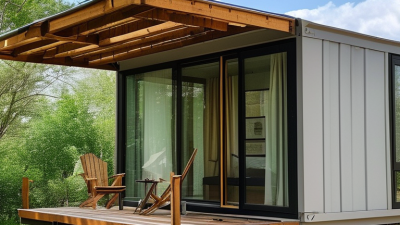
What Are the Top China Pre Built Tiny Homes Suppliers?
Choosing among China pre built tiny homes suppliers requires more than comparing attractive photographs and low factory prices. Buyers must examine construction quality, thermal performance, transport planning, customization, and after-sales support. A compact home may look complete in a showroom, yet perform differently after months of rain, heat, or coastal humidity.
Sarah Susanka, an architect and influential small-home specialist, expressed the central idea clearly: “It’s not about having less. It’s about making room for more of what matters.” Her principle applies strongly to pre built tiny homes. Every square meter should serve a clear purpose. A foldable dining table, deep storage drawer, or well-placed window can change daily life.
This guide evaluates leading Chinese suppliers through practical evidence. It considers factory experience, structural materials, insulation layers, wiring standards, plumbing design, and production consistency. It also looks at sample units, quality-control records, delivery terms, installation guidance, and warranty language. These details matter more than polished marketing.
Some promises look impressive. They may not survive careful questioning. A supplier should explain panel thickness, steel treatment, fire resistance, and moisture protection without vague answers. Factory photographs help, but independent inspections provide stronger confidence. Buyers should request recent project references and verify whether delivered homes match approved drawings.
No supplier is perfect. Even experienced manufacturers can face delays, design misunderstandings, or damaged components during shipping. That is why transparent communication matters. The strongest companies acknowledge limitations and offer workable solutions. This overview aims to identify dependable options while recognizing one uncomfortable truth: the cheapest quote may become the most expensive decision later.

What Are Pre-Built Tiny Homes and How Do They Work?
Pre-built tiny homes are compact dwellings manufactured in sections or as complete units before delivery. Workers install wall panels, wiring, plumbing, insulation, windows, and finishes inside a controlled factory. This process reduces weather delays and makes repeated quality checks easier. It is not magic. A completed unit may arrive by truck, then rest on prepared foundations or engineered supports. Crane placement can take hours, but site access often creates the real challenge.
A reliable supplier should explain floor plans, structural materials, thermal performance, and delivery limits in writing. Ask for inspection records, moisture protection details, electrical documentation, and a clear warranty process. Experienced buyers also confirm local planning rules, utility connections, transport width, and crane requirements before paying a deposit. These checks reveal whether a low quoted price is genuinely efficient or simply incomplete. Factory tours, sample wall sections, and independent inspections can provide stronger evidence than polished photographs. That evidence matters.
Inside, the workflow resembles a small production line. Cut materials are measured, assembled, tested, and finished in sequence. Bathrooms may be fully fitted before the module leaves the factory. On site, crews connect sections, seal joints, test services, and complete exterior work. However, factory precision cannot solve poor ground conditions or careless installation. I would leave a contingency budget for drainage, access repairs, and unexpected connection fees. Some specifications may change during production, so written approval records are worth keeping. The concept is efficient, but not effortless.
Common Pre-Built Tiny Home Formats
Pre-built tiny homes are factory-assembled dwellings delivered to a site for utility connection and final installation. The chart compares typical trailer-based formats using an 8.5-foot nominal width; floor areas are calculated from the stated home lengths.
Floor area is calculated as length × 8.5 feet: 20 ft = 170 sq ft, 24 ft = 204 sq ft, and 28 ft = 238 sq ft. All examples remain below the 400-square-foot limit referenced for tiny houses in IRC Appendix Q, where adopted by local authorities.
Which Features Define Reliable China-Based Tiny Home Suppliers?
Reliable China-based tiny home suppliers show their process clearly. They provide factory photos, production videos, and detailed construction drawings. A serious supplier explains wall thickness, insulation ratings, window specifications, and roof materials. Vague descriptions deserve caution.
Quality control should happen at several stages. Ask for welding inspections, electrical testing, waterproofing checks, and final dimensional reports. Reliable suppliers can share material certificates and testing documents from recognized laboratories. They also explain how homes perform in humid, cold, windy, or snowy conditions. Local building requirements still need independent verification.
Communication matters as much as manufacturing skill. A dependable supplier confirms the floor plan, finishes, delivery schedule, packaging method, and installation steps in writing. Sample units or virtual factory inspections can reveal details that brochures hide. Check how the supplier handles damaged panels, missing parts, and warranty requests. Slow answers before payment may become slower later.
A polished showroom proves little. I have learned that small details often expose weak systems. Ask who supervises loading and whether every component receives a numbered checklist. Pricing should identify transport, optional fixtures, and possible customization costs. Even experienced buyers can overlook drainage or ventilation. That mistake is expensive. Reliable suppliers welcome careful questions, although no factory performs perfectly every time. I would rather see an honest limitation than a flawless promise.
How to Compare China’s Top Pre-Built Tiny Home Manufacturers
What Are the Top China Pre Built Tiny Homes Suppliers?
Comparing China’s top pre-built tiny home manufacturers requires more than checking online photos. A reliable supplier should provide factory videos, material specifications, production schedules, and recent project evidence. Ask how the wall panels handle humidity, strong winds, and repeated transport. These details matter more than attractive interior images.
Review the company’s quality controls at each stage. Check frame welding, insulation thickness, window seals, plumbing routes, and electrical components. Request independent inspection before shipment. Also compare warranty terms, replacement procedures, packaging methods, and installation support. A low quotation may exclude foundation work, local utility connections, or port fees. I have learned that unclear exclusions create larger costs later. Still, even careful comparisons can miss small issues, such as damaged corner trim or delayed spare parts.
Tips: Prepare the same specification sheet for every manufacturer. Include dimensions, room functions, insulation targets, appliance requirements, and delivery location. Ask for itemized pricing instead of one total figure. Request sample documents, including test reports, drawings, and maintenance instructions. Confirm whether the design follows your local building and electrical requirements. A video call with the production team can reveal practical knowledge quickly. Ask them to explain one recent quality problem and its solution. Their answer may be more useful than polished sales language.
What Standards and Customization Options Should Buyers Check?
When comparing China pre built tiny homes suppliers, buyers should check standards before admiring floor plans. Ask which building codes guide the design and whether they match the destination country. Structural calculations should cover wind, snow, seismic conditions, and foundation loads. Electrical systems need suitable voltage, wiring protection, and inspection documents. Fire resistance matters too, especially around kitchens, heaters, and insulated wall panels.
Request material certificates, test reports, installation manuals, and quality records for each major component. An ISO-certified factory may show good management, but that certificate does not automatically prove every home is safe. Check insulation thickness, thermal performance, moisture control, and ventilation details. Small homes can develop condensation quickly. This is often overlooked.
Customization should be written into the quotation, not discussed only through messages. Confirm room dimensions, door swings, window positions, kitchen equipment, bathroom fittings, storage, ramps, and lighting points. Buyers can also request different cladding, roof styles, insulation systems, and interior finishes. Ask whether changes affect the structure, delivery schedule, or warranty. A factory sample may look excellent, yet hidden details can disappoint. Inspect welds, sealant joints, drainage outlets, and floor transitions through photos or a third-party visit. Leave room for correction; the first design is rarely perfect.
How to Select the Right Supplier for Your Tiny Home Project
Choosing a China-based prefabricated tiny home supplier requires more than comparing catalog prices. Start with your project’s real conditions: land access, climate, transport route, and intended use. Ask for factory photos, production records, and recent project references. A dependable supplier should explain wall thickness, insulation ratings, steel treatment, fire performance, and expected service life clearly. Vague promises are a warning sign. Request drawings showing doors, windows, plumbing points, electrical layouts, and load-bearing details before paying a deposit.
Experience is visible in the questions a supplier asks you. A careful team checks local wind, snow, humidity, and foundation requirements instead of copying one standard plan. Request material samples and inspect welds, seals, floor joints, and interior finishes. If possible, use an independent inspection company during production and before shipment. Confirm the inspection scope in writing. Factory certifications can help, but verify their issuing body, dates, and covered products. A certificate alone does not prove consistent workmanship.
Compare quotations line by line. Include packaging, inland delivery, export handling, installation guidance, spare parts, warranty limits, and response times. Clarify who handles damage claims and missing components. Keep every change in an approved specification sheet. Communication matters here; delayed answers often become construction delays. Attractive designs can lose value when replacement windows are difficult to source. That risk deserves attention. The cheapest offer may be affordable only on paper. Leave room for mistakes, weather delays, and local adjustments, because even a well-planned tiny home rarely arrives perfectly suited to its site.