10 Floor Lamp Buying Tips for Global Buyers
Buying a Floor Lamp for an international home involves more than choosing an attractive shade. Global buyers must compare lighting performance, electrical compatibility, materials, packaging, and after-sales support. A lamp that looks perfect online may arrive with the wrong plug, an unstable base, or insufficient brightness.
This guide turns those risks into practical checks. It considers voltage ranges, socket types, LED efficiency, color temperature, switch placement, dimensions, and safety documentation. Measure the reading corner before ordering. Check whether the seller states input voltage clearly. Ask for real product photos when finishes or cable colors matter.
Small details matter. A heavy base helps beside a sofa. A warm 2700K bulb suits quiet evenings. A 4000K option may work better near a desk. Confirm carton protection, replacement parts, warranty terms, and return responsibilities before payment. Country requirements differ, so buyers should verify local rules and approved markings with trusted retailers or qualified professionals.
No checklist is flawless. Product pages can omit important information, and shipping damage still happens. That is why reliable evidence matters more than polished images. Reviews with measurements, clear manuals, and responsive seller communication offer stronger confidence. The following ten tips help international shoppers make informed decisions, reduce avoidable costs, and choose a Floor Lamp that remains useful after delivery.
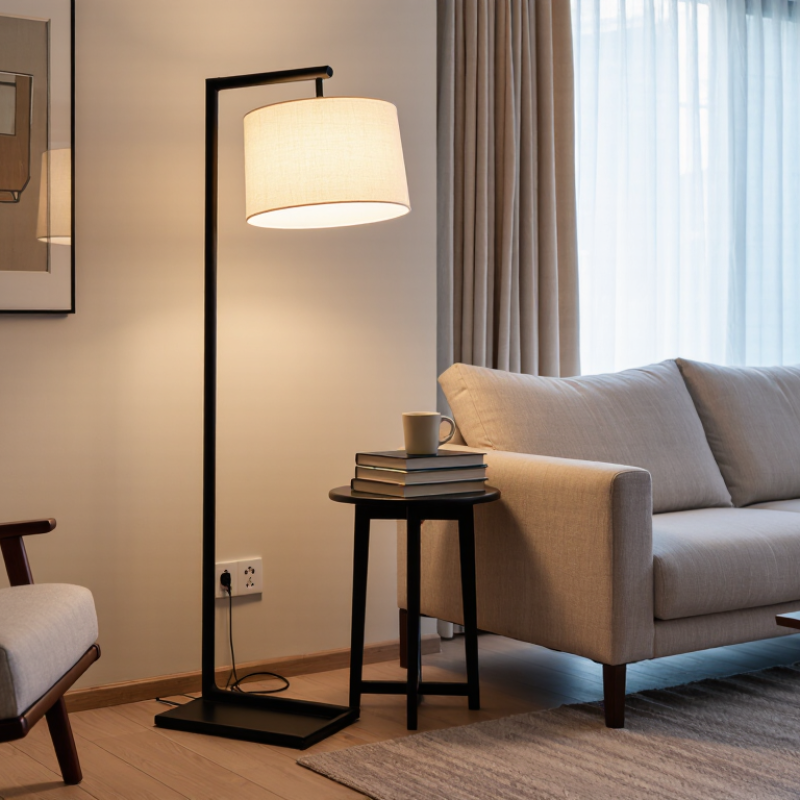
Define Floor-Lamp Types and Room Needs Using 800–1,600 lm Lighting Targets
A floor lamp should match the room’s task, not only its appearance. For general reading areas, target about 800–1,200 lumens. A living room with dark walls may need closer to 1,600 lumens. Lumens measure total light output, while watts measure energy use. That distinction prevents many buying mistakes.
Check the room before choosing the lamp. A narrow bedroom corner may work well with 800–900 lumens and a warm 2,700–3,000K color temperature. A home office often needs 1,000–1,600 lumens, especially beside a desk. Aim the shade downward and keep the light off your screen. For a reading chair, place the lamp slightly behind your shoulder. This reduces glare on printed pages.
Use a dimmer when possible. Real rooms change throughout the day. A lamp that feels comfortable at night may appear weak beside a sunny window. I have found that lumen ratings alone can mislead when a thick shade absorbs light. It is worth checking the actual brightness at seating height. Not every advertised figure reflects practical illumination. Choose stable construction, safe wiring, and electrical compatibility for the destination country. Inspect the plug, voltage range, and required safety markings before purchase. A beautiful lamp is still a poor choice if its light strains your eyes or its fittings do not suit the room.
Verify Electrical Safety with IEC 60598-1 and Local Certification Requirements
Buying a floor lamp for an international market requires more than checking its height, finish, and light output. Electrical safety should guide the decision. IEC 60598-1 covers general safety requirements for luminaires, including protection against electric shock, wiring, insulation, heating, and mechanical strength. It is a useful technical reference, not a universal approval for every country.
Ask the supplier for a current test report linked to the exact model. Check the rated voltage, frequency, plug type, grounding method, and maximum lamp wattage. These details should match the destination market. A familiar plug does not prove compliance. Look closely at the label and user instructions.
Local certification may also be mandatory. Requirements can differ between countries, and sometimes between product categories. Confirm whether the lamp needs local testing, registration, or an approved conformity mark before import. An IEC-based report may support the application, but it may not replace national approval. Keep the documents.
Physical inspection still matters. Examine the cable entry for sharp edges, test the switch repeatedly, and check whether the base remains stable on a slightly uneven floor. I once treated a clean test file as sufficient evidence; that was too optimistic. Documents can be outdated or prepared for another configuration. Ask when testing occurred, which components were used, and whether production units match the tested sample. Small gaps in verification can create large safety problems.
Compare LED Efficiency at 80–120 lm/W and Color Quality at CRI ≥80
10 Floor Lamp Buying Tips for Global Buyers
For a floor lamp, compare delivered lumens per watt, not the LED chip’s headline rating. The U.S. Department of Energy reported that mainstream LED products approached about 100 lm/W in its 2019 solid-state lighting forecast. A practical 80–120 lm/W range still separates efficient fixtures from average ones. At 800 lumens, an 80 lm/W lamp needs 10 watts. A 120 lm/W lamp needs only 6.7 watts. Measure the whole fixture.
Color quality matters beside energy use. A lamp rated CRI 80 can render skin, wood, and fabrics acceptably, but reds may still look weak. The International Commission on Illumination notes that general CRI does not fully describe modern color perception. Check R9 or an IES TM-30 report when reading areas need natural color. A red book cover should look red, not brownish.
Ask for independent LM-79 test data. It should show wattage, lumens, efficacy, CCT, and CRI at the fixture level. DOE guidance also separates initial performance from long-term maintenance, so request lumen-maintenance results when available. Some listings hide thermal losses. That is a problem. Dimming can also change color slightly, especially in inexpensive designs. My practical mistake was trusting CRI alone; a high number did not guarantee pleasant evening light. Compare the test report with the room, task, and local voltage requirements.
Assess Lifetime, Warranty, and Cost Using 25,000–50,000-Hour LED Ratings
A floor lamp’s LED rating deserves more attention than its advertised brightness. A 25,000-hour rating may suit occasional evening use, while 50,000 hours fits demanding daily operation. These figures are laboratory estimates, not promises for every home. Heat, voltage variation, dust, and frequent switching can shorten service life. The lamp’s driver matters too. A high-quality driver helps the LEDs maintain stable output.
I check the warranty before comparing prices. Look for coverage on the LED module, driver, switch, and power cable. Some warranties cover parts but exclude labor or shipping. That difference can matter when the lamp is imported. Confirm the warranty period, claim process, and required proof of purchase. A long warranty is useful, but unclear terms are not.
Cost should include the full ownership period. Compare the purchase price, electricity use, replacement parts, and possible repair labor. A cheaper lamp may become expensive if its sealed LED module fails early. An efficient 25,000-hour lamp can still be practical in a guest room. A 50,000-hour model may offer better value in a hotel, office, or reading corner used nightly. I once focused too heavily on the hour rating and overlooked poor heat ventilation. That was a costly lesson. Ask for lumen-maintenance data, operating-temperature limits, and compatible voltage information before ordering across borders.
LED Floor Lamp Buying Guide: Lifetime, Warranty, and Cost Planning
Compare common LED rated-life levels with the estimated service years at two realistic daily-use patterns. The estimates use 365 days per year and do not represent a warranty period.
How to use this chart: Estimated service years = rated LED hours ÷ (daily operating hours × 365). For example, a 25,000-hour rating provides approximately 22.8 years at 3 hours per day, or 8.6 years at 8 hours per day.
Warranty and cost checks: Confirm the warranty duration separately from the LED lifetime rating, then compare purchase price, rated wattage, local electricity rates, replacement availability, and the cost per 1,000 rated hours before buying.