
Designated supplier of the world's top 500 smart houses

What Are the Best Cigar Display Cases from China?

Choosing the best cigar display cases from China requires more than comparing prices and polished product photos. A reliable case should protect cigars while presenting them attractively in homes, lounges, retail spaces, and hospitality settings. Important details include Spanish cedar interiors, accurate hygrometers, stable seals, smooth hinges, and durable glass. These features affect humidity control, aroma preservation, and daily usability. The smallest construction details matter.

This guide examines cigar display cases through practical experience, product specifications, and supplier reliability. It considers solid wood, engineered wood, acrylic, tempered glass, and mixed-material designs. Each option has strengths, weaknesses, and different maintenance needs. Some cases look excellent but perform poorly in changing climates. Others offer dependable humidity retention with less impressive finishing. That distinction is easy to miss.

Manufacturing consistency also deserves attention. Buyers should review factory samples, material declarations, packaging standards, and quality-control records before placing larger orders. Responsible suppliers should communicate clearly about legal tobacco-storage applications, adult ownership, and international shipping requirements. They should not make unrealistic claims about humidity performance or material origin. Certifications can help, but they are not a complete guarantee.

The discussion also recognizes uncertainty. Supplier websites may omit important information. Product photos can hide uneven joints, weak magnets, or thin glass. A careful buyer should request close-up images, test reports, and a sample unit. Small errors remain possible. This guide compares practical value, craftsmanship, customization, and long-term reliability, helping readers identify cigar display cases that fit their storage environment and presentation goals.
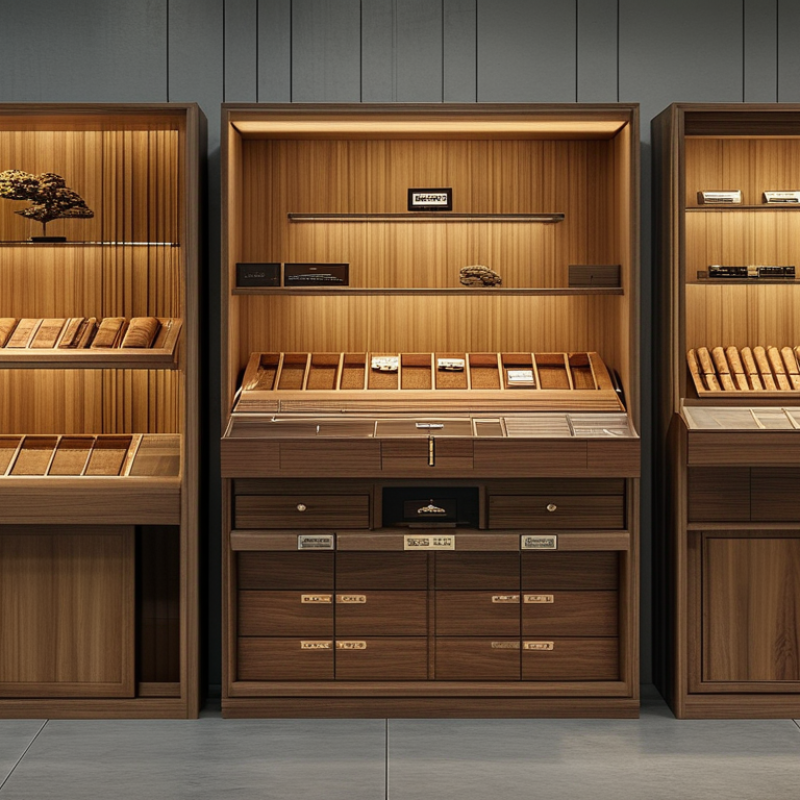
What Are the Best Cigar Display Cases from China?

Types of Cigar Display Cases Made in China

China produces several practical types of cigar display cases, each suited to a different retail or home setting. Glass-top wooden humidors remain popular because they combine presentation with controlled storage. Spanish cedar interiors help regulate moisture and protect aroma. A tight lid, reliable hygrometer, and adjustable humidity system matter more than decorative carving. Some wooden cases hold only a few cigars, while cabinet models include trays, drawers, and separate sections.

Acrylic display cases offer a lighter and often more affordable option. Clear panels provide an unobstructed view, while compact designs fit counters and shelves. However, acrylic may scratch easily and can insulate differently from wood. Metal display cabinets provide stronger frames, lockable doors, and a more commercial appearance. They often use glass shelves and interior lighting, although bright lighting may affect sensitive products over time. Travel cases usually feature foam or cedar compartments, water-resistant shells, and secure clasps.

Custom-made cases are another important category from China. Buyers can request specific dimensions, glass thickness, shelving layouts, and humidity equipment. In my experience, production samples reveal details that online images cannot show. Check door alignment, seal compression, hinge strength, and the hygrometer’s reading against a trusted instrument. A beautiful case can still perform poorly. I once underestimated ventilation around a cabinet, and moisture became uneven between shelves. That mistake changed my inspection checklist. Reliable suppliers should provide material specifications, testing information, and clear packaging details. Product compliance, safe materials, and responsible shipping documentation should also be verified before purchase.

Key Materials and Construction Features to Compare

What Are the Best Cigar Display Cases from China?

Material selection should come before appearance. Spanish cedar remains popular because its aroma, porosity, and insect-repelling properties support stable storage. However, cedar quality varies widely. Ask Chinese manufacturers for kiln-drying records, species identification, and moisture-content testing. The USDA Forest Products Laboratory’s Wood Handbook reports that interior wood commonly stabilizes near 6–8% moisture content in conditioned buildings. That figure offers a useful purchasing benchmark. Thin veneer over MDF may look attractive, but exposed edges can absorb moisture unevenly. A small flaw matters.

Construction controls humidity more effectively than decoration. Look for 4–6 mm solid-wood interior panels, overlapping doors, compression gaskets, and adjustable hinges. A tight seal reduces rapid humidity swings, while an electronic hygrometer reveals actual conditions. ASHRAE’s 2023 HVAC Applications Handbook stresses enclosure tightness, buffering materials, and continuous measurement in controlled storage environments. Therefore, a beautiful glass case without a reliable seal is incomplete. Tempered, low-iron glass improves visibility, but it should not replace interior humidity control.

Factory inspection needs practical evidence. Request corner-joint photographs, door-gap measurements, calibration certificates, and 48-hour humidity-stability test records. Check whether trays slide smoothly without scraping the lining. Confirm that adhesives and finishes have low emissions after curing. Independent testing is preferable to a factory promise.

My own buying preference would be a slightly plain case with accurate instruments, replaceable seals, and repairable hinges. Some suppliers overstate cedar thickness. That claim deserves verification.

How to Evaluate Humidity Control and Cigar Preservation

What Are the Best Cigar Display Cases from China?

How to Evaluate Humidity Control and Cigar Preservation

A strong cigar display case should control humidity, not merely look luxurious. ISO 3402:1999 conditions tobacco products at 22°C and 60% relative humidity. This standard offers a useful testing reference, although home storage often uses 65–72% humidity for softer texture and easier smoking. Buyers should ask Chinese manufacturers for sensor accuracy, calibration records, and test duration. A reading after two hours proves little. Stable readings over several weeks matter more.

Inspect the seal around the door carefully. A thin, uneven gasket can leak air near the hinges and corners. Choose a case with adjustable ventilation, a digital hygrometer, and a water-resistant interior. Solid wood shelves may absorb moisture, while untreated wood can introduce unwanted odors. Cedar-like materials should be clean, dry, and free from adhesive smells. It should smell neutral.

ASTM E104 describes saturated salt methods for checking humidity instruments. Request calibration against a recognized method, not only a factory screenshot. Also check whether the humidifier creates wet spots. Local moisture can damage wrappers even when the display shows an acceptable average. Temperature stability deserves attention too; repeated daily swings accelerate moisture movement. My practical mistake was trusting a beautiful glass case before testing its seal. The display looked excellent, but humidity dropped overnight. A seven-day empty-case test would have exposed that weakness earlier.

Best Chinese Cigar Display Cases for Different Uses

China offers cigar display cases for several practical settings, from home collections to retail counters. The best choice depends on capacity, visibility, and humidity control.

For home use, a compact glass-top case with a tight seal keeps cigars visible without occupying much space. Cedar lining helps regulate moisture and adds a clean woody scent. A built-in hygrometer is useful, but its reading should be checked with a separate calibrated device. Small errors matter. Retail displays need stronger hinges, clear panels, and adjustable shelves. These features support frequent access and make different sizes easier to arrange. For hospitality venues, choose a lockable case with a stable base. Security and presentation must work together. Heavy glass can look impressive, yet it may become inconvenient during cleaning or relocation.

Tips: Check the seal, hinge alignment, tray fit, and humidity meter before purchase. Ask for material details and testing records. A case marketed as cedar-lined may use only a thin veneer. That is not always a problem, but it deserves verification. For gifting, a polished wooden case with a simple interior may be more suitable than a large collector model. For travel, prioritize compact construction and impact-resistant corners, though display cases are not always designed for transport. I have found that attractive finishes can distract from weak seals, so inspect the practical details first. Good appearance helps, but stable storage matters more.

What Are the Best Cigar Display Cases from China? – Best Chinese Cigar Display Cases for Different Uses
Use Case Recommended Case Type Typical Capacity Main Materials Humidity Control Security & Protection Portability Key Advantages Important Considerations
Home cigar collection Desktop display humidor with glass lid 20–50 cigars Wood veneer or solid wood exterior; Spanish cedar lining; glass viewing panel Passive humidification with a humidifier and hygrometer Protects cigars from light, dust, and sudden environmental changes Low; intended for a stable indoor location Good visibility, attractive presentation, and convenient access Needs regular humidity checks; should be kept away from direct sunlight, heat, and air-conditioning vents
Large cigar collection Freestanding cabinet humidor 100–500+ cigars, depending on shelf layout Insulated cabinet body; Spanish cedar shelves or trays; tempered glass door Active electronic humidification or a large-capacity passive system Strong dust protection; lockable doors are available on many models Very low; designed for permanent placement High storage capacity, organized presentation, and easier collection expansion Requires a level floor, reliable power when electronically humidified, and periodic calibration of the hygrometer
Travel and outdoor use Hard travel cigar case 5–20 cigars Water-resistant polymer or aluminum shell; foam or cedar insert Usually passive; some models include a compact humidification container Impact-resistant, dust-resistant, and often fitted with a pressure-release valve High; compact and suitable for luggage or hand carrying Protects cigars from crushing, moisture exposure, and temperature changes during transport Limited capacity; long trips may require separate humidity maintenance
Business gifts and events Presentation cigar gift box 1–10 cigars Wood, coated board, metal fittings, or molded paperboard with a decorative finish Short-term protection; may include a small humidity pack compartment Protects against scratches and light during presentation High Professional appearance, easy customization, and efficient packaging for gifting Most presentation boxes are not intended for long-term cigar storage unless properly sealed and humidified
Retail counter display Lockable countertop display case 20–80 cigars Tempered glass, metal frame, engineered wood, and removable trays Passive or integrated electronic humidity control, depending on configuration Lockable door, visible product arrangement, and dust-resistant enclosure Medium; suitable for counters or display cabinets Improves product visibility while reducing handling and theft risk Glass surfaces require regular cleaning; confirm ventilation and power requirements for electronic systems
Hotel, lounge, or cigar bar Commercial display humidor 100–1,000+ cigars Insulated panels, glass doors, cedar shelves, metal hardware, and commercial-grade seals Powered humidification with digital monitoring is generally preferred Lockable access, strong door seals, and reduced exposure to frequent room traffic Very low; normally installed as fixed furniture Supports frequent customer access, organized inventory, and premium visual presentation Needs routine maintenance, stable room temperature, electrical safety checks, and accurate humidity monitoring
Small personal collection Compact travel humidor or small desktop humidor 5–20 cigars Sealed plastic, aluminum, or wood construction with a cedar tray or lining Passive humidification using a humidity pack or small humidifier Basic protection from dust and moderate physical pressure Medium to high Affordable, space-saving, and simple to operate Small internal volume can react quickly to temperature and humidity changes; avoid overfilling
Premium visual presentation Glass-front showcase humidor with interior lighting 30–150 cigars Tempered glass, wood cabinet, cedar shelves, and low-heat LED lighting Passive or electronic humidity control Glass enclosure limits dust; lockable fittings may be included Low to medium Creates strong product visibility and highlights cigar arrangement Lighting should produce minimal heat; the cabinet must be sealed well enough to maintain stable humidity

Buying, Customization, and Quality Checks Before Ordering

What Are the Best Cigar Display Cases from China?

Buying, Customization, and Quality Checks Before Ordering

Choosing a cigar display case from China requires more than comparing catalog photos. Start with the case’s construction, storage purpose, and supplier communication. A stable wooden body, accurate hinges, and a dependable seal matter more than decorative details. Ask for material specifications, interior dimensions, humidity-control compatibility, and production lead times. Clear answers often reveal the supplier’s practical experience.

Customization can include wood species, glass thickness, finish, logo placement, trays, dividers, and locking hardware. Request a technical drawing before production begins. Confirm every measurement in writing. A sample order is safer than approving a large batch from digital images alone. I once overlooked a tray clearance issue, and the finished compartment felt cramped. That mistake was avoidable.

Tips:

Check the lid alignment, corner joints, odor, and surface finish. Test the seal with gentle pressure. Inspect several units, not only the first sample. Ask for photos during assembly and before packing. An independent inspection can verify dimensions, scratches, accessories, and carton protection. Also confirm that wood treatment, labeling, packaging, and shipping documents meet the destination market’s requirements. Quality claims should be supported by records, not promises. A lower price may hide thinner panels or weaker fittings. Allow time for corrections; rushed approvals create expensive problems.

  • Wechat