
In 2026, global buyers will judge an Office Visitor Chair by more than appearance. Reception areas now serve as waiting zones, collaboration points, and visible brand statements. Grand View Research and Fortune Business Insights both forecast continued growth in the global office furniture market, although their estimates differ by methodology and coverage. That disagreement matters. Buyers should question attractive market figures before planning large purchases.
The strongest chair types will likely include upholstered guest chairs, sled-base models, stackable chairs, lounge visitor chairs, and compact tablet-arm designs. Each responds to a different workplace scene. A hotel-style lounge chair can soften a reception room. A stackable chair can support training areas with limited storage. A sled-base chair can slide neatly across tiled floors. Material choices also deserve scrutiny. BIFMA standards and sustainability reporting increasingly influence commercial furniture specifications, especially for recycled content, durability, and indoor emissions.
Comfort remains non-negotiable. Alan Hedge, a respected workplace ergonomics researcher and former Cornell University professor, is widely credited with saying, “The best posture is the next posture.” His principle supports visitor chairs that allow natural movement rather than rigid sitting. Yet comfort is often tested for only a few minutes. That is a weakness. Buyers should examine seat depth, edge pressure, back support, cleaning access, warranty terms, and replacement-part availability.
This guide compares the leading Office Visitor Chair types for international procurement teams. It considers user experience, freight efficiency, regional preferences, compliance expectations, and lifecycle value. The cheapest chair may not be the lowest-cost choice. Sometimes, a modest design performs better.
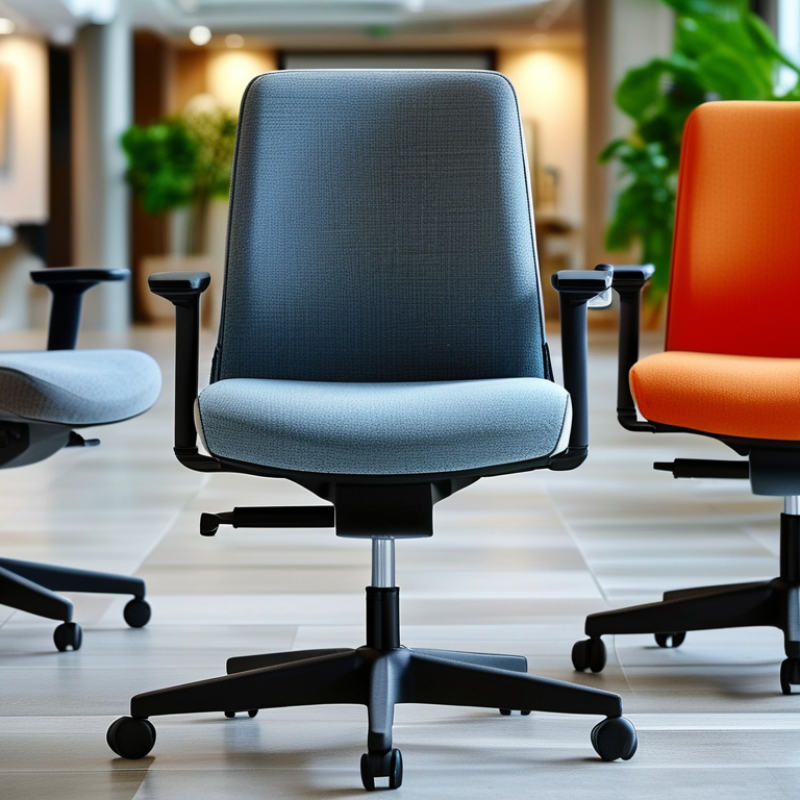
Office visitor chairs need a practical taxonomy, not a decorative label. Grand View Research valued the global office furniture market at about USD 57 billion in 2023. It also projects roughly 5% annual growth through 2030. That expansion increases pressure on buyers to specify chairs by use, movement, and maintenance.
Four types cover most global commercial spaces. Side chairs suit reception desks and short meetings, with compact frames and easy cleaning. Armchairs provide clearer personal boundaries in executive lounges or consultation rooms.
Sled-base chairs offer strong stability on hard floors, although their fixed geometry can feel restrictive. Stackable or nesting chairs support training rooms, shared offices, and seasonal events. They save floor space. But stacking height, lifting weight, and storage access deserve careful review.
In procurement projects, I have found that “comfortable” often means different things. A visitor waiting ten minutes needs different support than a guest attending a two-hour discussion. The Business and Institutional Furniture Manufacturers Association publishes performance guidance for commercial seating, including durability and safety considerations. Buyers should request test evidence, fabric abrasion data, load ratings, and replacement-part policies. Regional users may also need moisture-resistant surfaces or metric-compatible hardware. One weakness remains: many comparison sheets ignore cleaning time. That omission can distort total cost. A chair that looks affordable may require frequent labor, especially in busy reception areas.
For global buyers, visitor chairs should balance welcome, posture, and measurable fit. A 17–19-inch seat width, equal to about 43–48 centimeters, suits many adult users. Yet it cannot serve every body equally. A 19-inch seat may feel generous, but excessive width can reduce arm support and lateral stability.
ISO 9241-5:1998 focuses on workstation posture, clearances, and adjustable relationships between users and equipment. It does not prescribe one universal visitor-chair dimension. Buyers should therefore check seat height, depth, back-angle support, and usable legroom together. BIFMA G1-2013 also applies anthropometric principles to computer-work furniture. Its practical message is clear: dimensions should support varied users, not merely look standard.
WHO’s Musculoskeletal Health report estimates that 1.71 billion people live with musculoskeletal conditions worldwide. This figure is not a chair-performance score. It does show why short meetings can still create discomfort when seats compress thighs or force rounded backs. In showroom trials, test a 17-inch and a 19-inch seat with different users. Ask about pressure behind the knees. Check whether feet rest flat after ten minutes. A mistake remains possible. Material softness can hide poor geometry during a brief test, while visitors often sit longer than procurement teams expect.
| Chair Type | Typical Seat Height | Seat Width | Seat Depth | Recommended Load Rating | Typical Ergonomic Features | Best-Fit Office Use | ISO 9241-5 Alignment Consideration |
|---|---|---|---|---|---|---|---|
| Four-Leg Stackable Visitor Chair | 17.0–18.5 in | 17.5–19.0 in | 16.0–17.5 in | 250–300 lb | Contoured waterfall seat edge, breathable back, stable four-leg base, optional linking device. | Reception areas, training rooms, waiting rooms, and occasional visitors. | Supports a stable seated posture and adequate leg clearance when paired with correctly sized tables. |
| Sled-Base Guest Chair | 17.0–18.5 in | 18.0–20.0 in | 16.0–18.0 in | 250–300 lb | Flexible back, anti-slip glides, broad seat, low-maintenance upholstery. | Executive offices, consultation rooms, and short-to-medium meetings. | A supportive back angle and unobstructed foot space help users maintain a relaxed working posture. |
| Cantilever Visitor Chair | 17.5–19.0 in | 18.0–20.0 in | 16.0–18.0 in | 250–300 lb | Slight dynamic flex, padded back and seat, stable steel frame, protective floor glides. | Boardrooms, client meeting rooms, and formal reception spaces. | Controlled back movement can support posture changes; seat height should still permit flat-footed sitting. |
| Guest Chair with Casters | 17.5–19.0 in | 18.0–20.0 in | 16.5–18.0 in | 250–300 lb | Four- or five-wheel base, braking casters, flexible back, optional seat-height adjustment. | Shared offices, hot desks, interview rooms, and collaborative areas. | Mobility and adjustability can improve workstation fit, provided the chair remains stable during entry and exit. |
| Tablet-Arm Visitor Chair | 17.0–18.5 in | 17.0–19.0 in | 16.0–17.5 in | 250–300 lb | Fold-away writing tablet, integrated book rack, compact footprint, left- or right-hand tablet options. | Seminar rooms, visitor orientation, short training sessions, and flexible learning spaces. | The writing surface should allow neutral elbow and wrist positions without forcing excessive forward reach. |
| Upholstered Lounge Visitor Chair | 16.5–18.0 in | 19.0–23.0 in | 18.0–21.0 in | 300–350 lb | Generous cushioning, supportive arms, durable upholstery, slightly reclined back. | Reception lounges, hospitality areas, and informal conversation zones. | Designed for relaxed sitting rather than desk work; avoid pairing with work surfaces that require prolonged forward reach. |
| High-Back Conference Visitor Chair | 17.5–19.0 in | 18.0–20.0 in | 16.5–18.0 in | 250–300 lb | Upper-back support, padded armrests, synchronized or flexible back, polished or coated frame. | Long meetings, conference rooms, negotiation rooms, and boardrooms. | Backrest support and seat height should accommodate posture variation without restricting shoulder or leg movement. |
| Armless Compact Visitor Chair | 17.0–18.5 in | 17.0–18.5 in | 15.5–17.0 in | 250–300 lb | Narrow profile, lightweight frame, stackable construction, rounded front edge. | Small reception areas, touchdown spaces, clinics, and high-density meeting rooms. | Allows closer approach to a desk or table; adequate seat width and unobstructed legroom remain essential. |
For global buyers, visitor chairs should be judged by test evidence, not appearance alone. ANSI/BIFMA X5.1 provides a recognized framework for evaluating office chair safety, strength, and durability. It examines components such as the seat, back, base, and connections under repeated and static forces. A 275-pound test load is commonly used in durability evaluations, but it does not automatically define a chair’s recommended user capacity.
Ask suppliers for the exact test report, standard edition, test methods, and product configuration. A chair may pass testing with one frame, while a revised frame or thinner cushion requires separate verification. Check whether the report covers the complete chair, not only individual components. This detail is often missed.
In practical inspections, I look for loose fasteners, uneven welds, sharp edges, and movement between the seat and backrest. Place chairs on level flooring and test them repeatedly, especially near reception desks and meeting rooms. A stable chair should remain quiet and firm after frequent use. Still, laboratory results cannot fully predict every workplace. Cleaning chemicals, uneven floors, misuse, and outdoor exposure may reduce service life. Buyers should therefore compare test data with warranty terms, maintenance guidance, and the expected traffic level. A higher load rating is useful, but it cannot replace sound construction and honest documentation.
The chart uses a 275-lb occupant-load benchmark as a common screening reference when comparing visitor chair designs. Guest, sled-base, four-leg, cantilever, and tablet-arm chairs can all be evaluated against applicable ANSI/BIFMA X5.1 test requirements. The 275-lb value is a reference load benchmark, not a complete certification claim; buyers should verify the tested configuration, product documentation, and applicable standard edition.
Office visitor chairs must balance comfort, movement, storage, and long-term reliability. Stackable chairs suit reception areas, training rooms, and meeting spaces that change daily. Their frames should align smoothly without scraping floors or damaging upholstery. Check the stacked height before ordering. A small storage mistake can consume valuable room.
Foldable chairs offer faster room conversion and simpler transport. Look for secure hinges, stable locking points, and handles that do not pinch fingers. They work well for temporary events, but frequent folding may loosen weak joints. I recommend testing a sample through repeated opening and closing before approving a large shipment. Convenience is not always durability.
Upholstered chairs provide a warmer, more formal impression, especially in executive waiting areas. However, fabric can retain dust and stains in busy facilities. Mesh allows airflow in hot climates and reduces the heavy feel of a padded seat. It may feel too firm for visitors waiting longer than expected. Compare seat depth, back support, foam density, and cleaning requirements with real users. Materials also react differently to humidity, sunlight, and shipping conditions. A perfect chair rarely exists. Procurement teams should record these compromises clearly, rather than trusting attractive product images.
2026 Top Office Visitor Chair Types for Global Buyers
A practical buying matrix starts with the room, not the chair photograph. Compact guest chairs suit reception desks and narrow meeting rooms. Stackable chairs support training areas, especially when storage space is limited. Lounge chairs create a calmer welcome zone but need wider circulation paths. Sled-base chairs offer stability on hard floors, while lightweight four-leg chairs simplify frequent rearrangement. Match each type with expected sitting time, visitor turnover, cleaning frequency, and available floor area.
Compliance must be checked against the destination market and the chair’s actual use. Request test reports for load capacity, durability, flammability, chemical emissions, and material safety where relevant. Accessibility also matters. Leave clear routes and avoid layouts that restrict wheelchair movement. A certificate alone is not enough. Verify its scope, date, and testing method.
Tips: Build a three-column matrix: space, use, and compliance. Add a fourth column for cleaning and maintenance. Measure door widths before ordering. Specify user weight ranges honestly. A beautiful chair can fail in a busy lobby. Do not assume one regional standard satisfies every market. Requirements change, and local review is still necessary. A neat matrix can still mislead. Recheck it with facilities staff before purchase.