How to Build a Modular House That Fits Your Budget and Needs?
The modular house industry is gaining momentum, driven by affordability and customization. According to a 2022 report by the Modular Building Institute, modular homes can reduce construction time by up to 50%. This efficiency presents an appealing solution for budget-conscious homeowners. Yet, achieving a balance between cost and essential features remains a challenge.
Expert Bob McDonald, a well-regarded figure in the modular house sector, emphasizes, "Building with modules allows for creativity while sticking to a budget." This balance is essential as buyers want both functionality and aesthetics. Homebuyers often underestimate the costs involved. They need to consider not just the initial price but also future expansions.
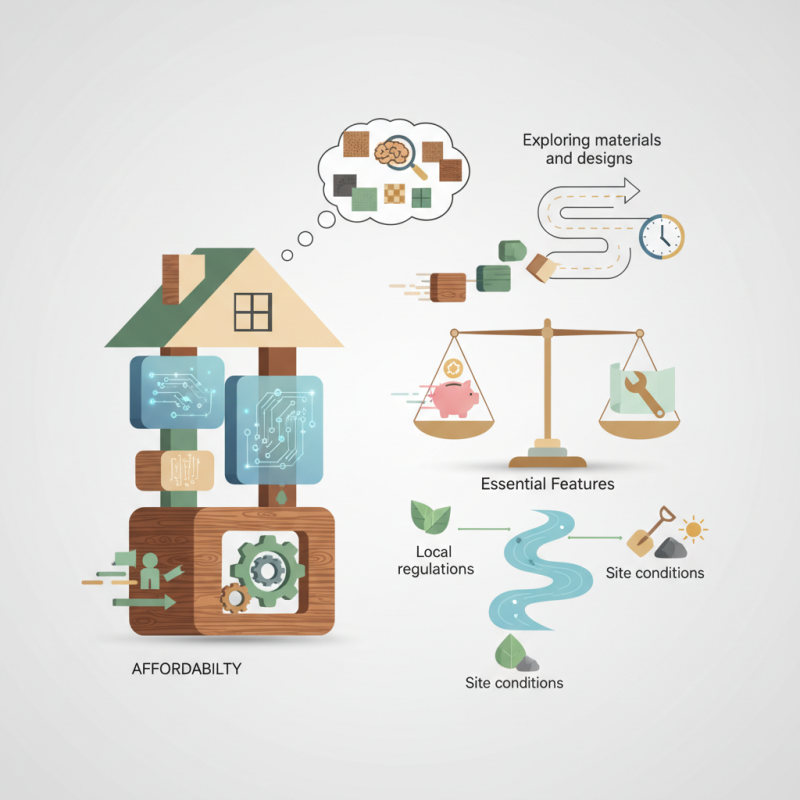
Understanding local regulations and site conditions is critical. They can significantly impact the total investment. Modular houses offer flexibility, but every decision counts. Exploring different materials and designs is crucial. However, rushing through choices can lead to regrettable mistakes. Reflecting on each step can lead to a home that truly meets your needs and fits within your budget.
Understanding Modular Houses: Basics and Benefits
Modular houses are a growing trend in the construction industry. They offer flexibility and affordability. According to recent data, modular homes can be built 10-20% faster than traditional homes. This speed can significantly reduce labor costs. Many buyers are attracted to this efficiency.
Understanding the basics is crucial. Modular houses are prefabricated in sections. These sections are then transported to the site for assembly. This process minimizes on-site construction time. Energy efficiency is another key benefit. Reports indicate that modular homes often use sustainable materials, leading to lower energy bills.
Tips: Focus on design. Consider your lifestyle needs. Do you require more storage? Think about future family growth. Balancing needs and budget is essential. Keep in mind that customization options can add costs.
While modular homes offer numerous benefits, there are limitations. Limited designs may not fit every taste. Some regions have strict zoning laws which affect placement. Research local regulations thoroughly.
How to Build a Modular House That Fits Your Budget and Needs?
| Feature |
Description |
Cost Range ($) |
Time to Build (Weeks) |
| Foundation |
Concrete slab or crawl space |
5,000 - 15,000 |
2 - 4 |
| Framing |
Steel or wooden frame construction |
20,000 - 50,000 |
4 - 8 |
| Roofing |
Various materials available (metal, shingles) |
7,000 - 15,000 |
1 - 3 |
| Interior Finishing |
Walls, floors, and fixtures |
10,000 - 30,000 |
2 - 6 |
| Utilities |
Plumbing, electrical, HVAC systems |
15,000 - 25,000 |
2 - 5 |
| Inspection and Permits |
Required approvals and inspections |
1,000 - 3,000 |
1 - 2 |
Assessing Your Budget: Key Financial Considerations
When assessing your budget for a modular house, consider several critical factors. According to the National Association of Home Builders, nearly 60% of homebuyers prioritize costs. A modular house can range from $100 to $200 per square foot, depending on design and materials. This means that a 1,500-square-foot home could cost between $150,000 and $300,000.
Financing options also play a significant role. Traditional mortgages might cover only part of the cost, especially if land acquisition is involved. You'll need to include site preparation and utility installations in your budget. Research shows that nearly 40% of homeowners overlook these expenses, leading to financial strain.
Flexibility is essential in deciding on features and finishes. Evaluating your needs can sometimes expose surprising costs. If you desire high-end materials, be prepared to make trade-offs. For instance, choosing standard fixtures instead might save thousands. Balancing desires with practical costs is vital in achieving a satisfactory outcome.
Identifying Your Needs: Space, Design, and Functionality
When considering a modular house, identifying your needs is crucial. Start by assessing your space requirements. How many bedrooms do you need? Think about your family size. Perhaps you have kids or plan to have guests. Each person's need for privacy impacts the design. A simple three-bedroom layout could feel cramped for a large family.
Design is another key factor. What style appeals to you? Modern, rustic, or something in between? Consider how the design influences your daily life. Open spaces can feel welcoming, but they may lack warmth. On the other hand, smaller rooms allow for cozy corners but might feel disconnected. Selecting the right balance is essential.
Functionality directly affects your living experience. What activities do you prioritize? If you enjoy cooking, a spacious kitchen becomes vital. A functional home office is key for remote workers. However, it’s easy to compromise on one area for another. Reflecting on these trade-offs can reveal unexpected needs. Embrace imperfections; they can lead to a unique and suitable design.
Planning Your Modular Home Project: Steps to Follow
Planning your modular home project involves several detailed steps. Start by defining your budget limits. Determine what you can comfortably afford. This will help narrow down your options. Next, think about your space needs. Consider the number of rooms you require. You may want an open floor plan or separate rooms depending on your lifestyle.
Research different modular designs that fit your requirements. Explore layouts and materials online. Look for inspiration in home magazines or local showrooms. Make a list of features that are essential for you.
Once you have a clear idea, consult with experts. Getting advice from professionals can save time. They may highlight aspects you haven't considered. For instance, zoning regulations are crucial. Failing to address this could lead to costly adjustments. Be prepared for setbacks in the planning phase. It’s common to adjust your vision as you gather more information. Embrace the process, even if it's challenging at times.